


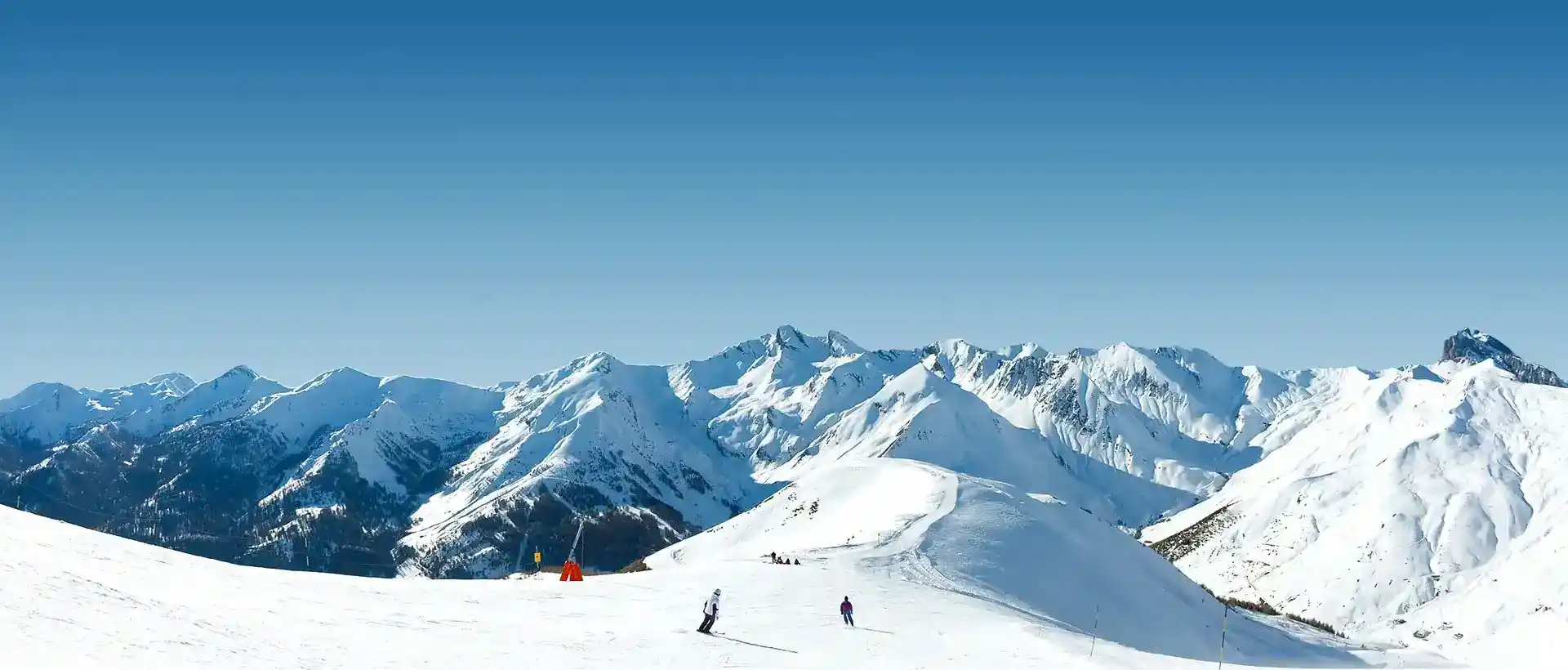
Val Thorens - Ski, Snowboard & Summer Holidays
Val Thorens is Europe's highest ski resort, sitting at an altitude of 2,300 metres in the heart of the famous Three Valleys ski area. Renowned for its exceptional snow reliability, long winter season and direct access to over 600km of linked pistes, it's a favourite with skiers and snowboarders of all abilities. The resort combines outstanding skiing with a lively après-ski scene, modern lift system and a wide choice of accommodation, restaurants and activities. Whether you're planning your first ski holiday or you're a seasoned skier looking to maximise your time on the slopes, Val Thorens offers one of the most complete mountain holiday experiences in the Alps.
The highest resort and sitting at the head of the Belleville valley, there are easy options to ski over to Meribel, St Martin de Belleville and Les Menuires. From Val Thorens you can also ski over into the "4th Valley" of Orelle.
Why Choose Val Thorens for Your Ski Holidays
With the highest slopes in the Three Valleys, plus a glacier or two, Val Thorens can always provide the best snow conditions. Built completely above the tree line, Val Thorens also offers easy access to the rest of the Three Valleys.
Val Thorens is one of the most popular destinations for ski holidays in the French Alps, attracting visitors from across Europe thanks to its high-altitude skiing, extensive terrain and vibrant village atmosphere.
Summer holidays in Val Thorens
With its combination of outdoor adventure, family-friendly activities and stunning Alpine landscapes, Val Thorens is becoming an increasingly popular destination for summer mountain holidays in the French Alps.
During the summer months, the resort transforms into a peaceful alpine playground surrounded by spectacular mountain scenery. Visitors can enjoy hiking and mountain biking on an extensive network of trails, take in panoramic views from scenic lifts, try activities such as trail running, zip-lining and climbing, or simply relax in the fresh mountain air. The high altitude offers pleasantly cool temperatures, making Val Thorens an excellent escape from the summer heat. Whether you're looking for an active mountain holiday or a chance to unwind in beautiful surroundings, Val Thorens provides a refreshing alternative to a traditional beach break.
Val Thorens Holiday Activities & Things to Do
Val Thorens Winter Activities
cross country skiing (les Menuires), fitness centre, spa facilities, sports centre, snowmobiling, winter walking trails, toboganning.
Val Thorens Summer Activities
mountaineering, climbing, hiking, walking, summer skiing, mountain biking, rafting, horse riding, summer sledging, archery, tennis, swimming pool, fishing, parapenting
Val Thorens Ski Holidays – Resort Guide & Essential Info
Eating Out in Val Thorens
Dining in Val Thorens caters for every taste and budget, with everything from traditional alpine dishes to gourmet restaurants and casual cafés.
Val Thorens Après Ski
Val Thorens offers one of the Alps' most vibrant après-ski scenes, with bars, live music and nightlife to suit every taste.
Non-Ski Activities in Val Thorens
activities include spa and wellness facilities, snowshoeing, tobogganing, zip-lining and a sports centre.
Ski Facts

Resort Altitude:
2300m

Ski Area:
3 Vallées

Height at Summit:
3200m

Marked Runs:
600km

Snow Making:
Yes

Snow Quality:
Travel Facts

Nearest Airports:

Rail
Moutiers
FAQs
What makes Val Thorens so special?
Ask ten skiers why they love Val Thorens and you'll probably get ten different answers, but one thing comes up time and again – it's a resort that seems to have everything working in its favour.
The first thing is the altitude. At 2,300 metres, Val Thorens is the highest ski resort in Europe, and that makes a real difference. The snow stays colder, the season is one of the longest in the Alps and you can usually ski with confidence from late November right through to early May. If snow reliability is important to you, Val Thorens is hard to beat.
The skiing itself is another reason people return year after year. The slopes above the resort are wonderfully wide and open, giving you plenty of space to enjoy long, sweeping turns. Whether you're cruising down a perfectly groomed blue run or opening up your turns on one of the long reds, there's plenty of choice. You can easily ski from aspect to aspect in a bowl shaped terrain..
Then there's the access to the Three Valleys. One day you can spend your time exploring the high mountain terrain around Cime Caron and Péclet, and the next you can ski over towards Méribel, enjoying completely different scenery and terrain. If the weather closes in or the light becomes flat, many experienced skiers head down towards Saint-Martin-de-Belleville or into the Méribel Valley, where the tree-lined runs provide better contrast and shelter.
The views are spectacular too. Because you're starting so high, you're surrounded by peaks rather than looking up at them. On a clear day you can see for miles, and standing at the top of Cime Caron is something every skier should experience at least once.
Of course, being one of the highest resorts in Europe does mean it can get cold, particularly in January and February. Temperatures of -10°C to -20°C aren't unusual during colder spells, especially first thing in the morning or on exposed lifts. But that's simply part of skiing at altitude. Dress properly with good layers, warm gloves, a neck warmer and decent goggles, and you'll soon discover that crisp, dry mountain air often feels far more comfortable than damp cold back home.
Another thing we really like about Val Thorens is the atmosphere. Despite being a purpose-built resort, it has developed its own character over the years. It's lively without feeling overwhelming, welcoming to families, popular with groups of friends and packed with skiers who simply love spending time in the mountains.
For us, that's what makes Val Thorens so special - It's not just the altitude or the snow, impressive though they are. It's the combination of reliable conditions, huge variety, access to the world's largest linked ski area and the feeling that every day you can ski somewhere different. Whether it's your first visit or your tenth, there's always another valley to explore and another favourite run waiting to be skied.
One of the advantages of booking through Chalets Direct is that many of our chalet owners and local operators have skied in Val Thorens for years. They'll happily recommend their favourite runs, tell you where to find the quieter slopes on a busy day or suggest which valley to head for depending on the weather. That sort of local knowledge can make a good holiday even better.
Where should I stay in Val Thorens?
Val Thorens is a purpose-built ski resort. It was designed with skiers in mind, so wherever you stay, you're rarely far from a ski lift or a piste. In fact, one of the resort's biggest advantages is the amount of genuine ski-in, ski-out accommodation available, making it easy to get onto the slopes each morning and often ski right back to your door at the end of the day.
If it's your first visit, staying in the central area around Place Caron and Rue de Caron is an excellent choice. You'll be close to the main lifts, ski hire shops, supermarkets, restaurants and bars, with everything within easy walking distance. It's particularly convenient for families and anyone who wants to make the most of the resort without needing to walk far in ski boots.
For keen skiers, the Péclet area is another excellent option. It's close to the lifts serving the Péclet Glacier, the Cime Caron cable car and the routes into Méribel and the wider Three Valleys ski area. Many apartments and chalets here offer true ski-in, ski-out convenience, so you can simply clip into your skis outside and head straight onto the mountain.
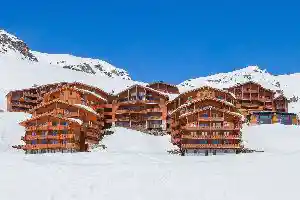
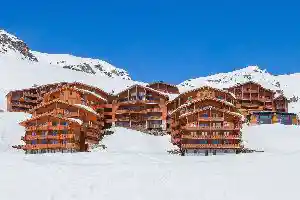
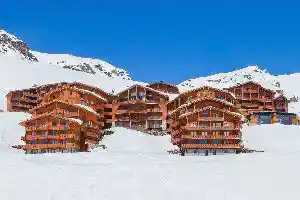
If you'd prefer a quieter atmosphere, the Balcons area sits slightly above the centre of the village. It's popular with families and larger groups thanks to its spacious chalets and fantastic panoramic mountain views. Although some properties involve a short walk or access via ski paths, you're still only minutes from the lifts.
Val Thorens offers accommodation to suit every type of holiday, from cosy self-catered apartments and traditional catered chalets to hotels and luxury residences. Because the resort is compact, you're never far from restaurants, shops or the slopes, whichever type of accommodation you choose.
If you'd like to be close to the liveliest bars and après-ski, the central part of the resort is your best bet. If your priority is quick access to the slopes, Péclet is hard to beat, while those looking for a more peaceful setting often prefer Balcons.
When you book through Chalets Direct, you can speak directly with chalet owners and local accommodation providers who know the resort exceptionally well. They can advise whether a property is genuinely ski-in, ski-out, which lifts are easiest to access, and whether a particular location is better suited to families, groups or couples.
The good news is that there really isn't a bad area to stay in Val Thorens. Thanks to its compact layout and skier-friendly design, getting onto the mountain is always quick and easy. The best choice simply depends on whether you want to be in the heart of the action, close to your favourite lifts, or somewhere a little quieter to relax after a day on the slopes.
Is Val Thorens good for families?
Val Thorens is hard to beat for a family ski holiday.
People often think of it as a high-altitude resort with lively après-ski, but the reality is that it's also one of the easiest ski resorts to manage with children. Much of that comes down to how compact and convenient it is.
You don't need to spend half your holiday walking or driving from place to place. The village is largely pedestrian-friendly, and wherever you're staying, you're usually only a short walk from the lifts, ski hire shops, supermarkets and restaurants. Many apartments and chalets are genuinely ski-in, ski-out, which makes a huge difference when you're helping children into ski boots or carrying everyone's skis at the beginning and end of the day.
Families often choose areas around Place Caron, Rue de Caron, Arolles or Balcons. The centre of the resort puts everything within easy reach, while Balcons offers a quieter atmosphere and often larger chalets that work well for extended families or groups travelling together.
For children learning to ski, Val Thorens has excellent beginner areas and a choice of highly regarded ski schools, including ESF, Evolution 2, Prosneige, New Generation and several independent instructors. There are dedicated learning zones where children can build confidence before progressing onto the wider mountain, and because the resort is so high, the snow is usually reliable throughout the season.
Parents often tell us they like the fact that the family doesn't have to split up. Beginners have plenty of suitable slopes, while stronger skiers can explore the Three Valleys before meeting everyone again for lunch or at the end of the afternoon.
There is also plenty to do once the lifts close. If the weather isn't perfect or you simply fancy a break from skiing, the excellent Le Board Sports Centre has a swimming pool, children's splash area, wellness facilities, climbing wall, sports courts and fitness centre. There's also a toboggan run, ice-driving experiences nearby, snow tubing, shopping and plenty of cafés where it's easy to warm up with a hot chocolate.
Teenagers generally love the atmosphere in Val Thorens. The resort has a youthful energy without feeling overwhelming, and older children often enjoy the fun zones, snowparks and the freedom of a compact resort where everything is close together.
Another thing that makes life easier is the wide choice of family-friendly restaurants. Whether you're looking for a quick pizza, traditional Savoyard dishes or somewhere to celebrate a special occasion, you'll find plenty of options within walking distance.
At the end of the day, family ski holidays are about spending time together, not worrying about logistics. Val Thorens makes that easy. The reliable snow, compact village, excellent facilities and straightforward access to the slopes mean parents can relax a little more, children can enjoy themselves, and everyone gets to make the most of their time in the mountains.
Is Val Thorens good for beginners?
One of the biggest advantages of Val Thorens is how quickly beginners can start feeling like they're central to the resort. There are excellent learning areas right next to the village, so your first lesson doesn't begin with a long walk or a complicated lift journey. You can usually leave your accommodation and be on the beginner slopes within a few minutes.
The dedicated learning areas around Place Caron and the Cairn sector have gentle nursery slopes, magic carpets and easy lifts where you can build confidence without feeling rushed. Once you've mastered the basics, you're not stuck there for the rest of the week. Val Thorens has plenty of very wide, gentle green and blue runs, including areas around Cairn, Campagnols and the gentle pistes towards Les Deux Lacs, where you can start covering more of the mountain at your own pace.
One thing many beginners notice is how wide the pistes are. Instead of feeling squeezed into narrow runs, you have plenty of room to make your turns without worrying about other skiers flying past. It makes learning much more relaxing and much more enjoyable.
The ski schools are another reason Val Thorens is good with first-time skiers. ESF, Evolution 2, Prosneige, New Generation and several independent instructors all offer lessons for adults, children and complete beginners. Whether you prefer learning in a small group or having one-to-one tuition, you'll find an instructor who matches your style. English-speaking instructors are widely available.
If you're travelling with family or friends who already ski, Val Thorens works particularly well. While you're learning, they can explore the Three Valleys before meeting you for lunch or helping you practise on the easier runs later in the afternoon. Before long, you'll probably be joining them on some of the gentler blue runs, and that's often the moment people realise they've become skiers.
One thing we often hear from beginners is that guests arrive feeling nervous about learning to ski and leave wondering why they didn't try it years ago. The combination of reliable snow, friendly instructors, well-designed beginner areas and a relaxed atmosphere gives people confidence from day one.
If you're thinking about learning to ski, don't let Val Thorens' reputation as Europe's highest ski resort put you off. Yes, there's plenty of challenging terrain for experts, but there's also a huge amount of gentle skiing designed to help beginners enjoy themselves. You'll be learning in one of the best ski areas in the world, and with the right instructor, you'll probably be surprised how much of the mountain you can experience by the end of your holiday.
Is Val Thorens a good ski resort for intermediate skiers?
Yes, Val Thorens is an excellent ski resort for intermediate skiers and, for many visitors, this is where the resort really comes into its own. The combination of high-altitude skiing, wide open pistes and access to the enormous Three Valleys ski area means there is an almost endless choice of runs to explore.
One of the biggest advantages for intermediates is the amount of varied blue and red terrain. The slopes above Val Thorens are generally wide, confidence-building and well maintained, making them ideal for skiers who have moved beyond the beginner stage and want to improve their technique while enjoying longer runs. You can spend the morning cruising gentle blues, then progress onto more challenging reds as your confidence grows.
The layout of the ski area also works particularly well for intermediates. From Val Thorens, you can explore towards Méribel and Courchevel, discovering different valleys, landscapes and styles of skiing without needing expert-level skills. Many intermediate skiers enjoy having the freedom to cover huge distances and feel like they are on a real mountain adventure.
The higher altitude also means the snow conditions are often excellent, giving intermediate skiers more confidence when tackling longer descents. On colder or cloudy days, some of the higher slopes can feel more exposed, but the beauty of the Three Valleys is that you can usually find a better option by changing altitude or heading towards more sheltered areas.
Val Thorens is also a good choice for mixed groups where everyone has different abilities. Stronger skiers can head further into the Three Valleys, while intermediate skiers can enjoy fantastic terrain closer to the resort without feeling they are missing out.
For intermediate skiers looking for a holiday with plenty of variety, reliable snow and the chance to explore one of the world's largest linked ski areas, Val Thorens is hard to beat. Whether it's your first time skiing a major Alpine area or your tenth visit, there is always another run, another valley and another view waiting to be discovered.
Is Val Thorens good for advanced skiers?
If you're an advanced skier, Val Thorens is a resort where you could happily ski for a week and still feel as though you've only scratched the surface. Its combination of high-altitude terrain, excellent snow reliability and direct access to Les 3 Vallées – the world's largest linked ski area – makes it one of the best bases in the Alps for skiers who like variety and covering ground.
From Val Thorens, you can head in almost any direction and discover something different every day. One day you might explore the high mountain terrain around the resort, the next ski across towards Méribel or Courchevel, or venture into the quieter valleys around Les Menuires, Saint-Martin-de-Belleville or Orelle. If you enjoy exploring rather than repeating the same pistes, the scale of the ski area is a huge attraction.
The terrain around Val Thorens itself is superb. Above the resort you'll find the dramatic Cime Caron, one of the great viewpoints in the Alps. The long black descent from the summit is a real classic, while the surrounding reds open up to wide-open slopes.
One of the things that makes Val Thorens so enjoyable is the variety. You can spend the morning carving wide, perfectly groomed pistes, ski the steeps after lunch and finish the day weaving through quieter reds towards Les Menuires., or the other way around! Some runs are open and forgiving, others are steeper and more technical, while the variation in aspects of the mountain mean you can find different snow conditions throughout the day.
Then there's the off-piste.
The bowls around Péclet, Cime Caron, La Masse and the routes towards Orelle provide some outstanding off-piste skiing after fresh snowfall. There's enough terrain here to keep even the strongest skiers coming back year after year.
Like anywhere in the high mountains, though, it's important to respect the conditions. Avalanche risk is a fact of life in the Alps, and some of the most tempting-looking slopes can become dangerous very quickly. We'd strongly recommend hiring a qualified mountain guide or instructor. Not only will they help keep you safe, they'll almost certainly show you hidden routes and fresh snow that you'd never find on your own. It takes the pressure off, most experienced skiers will tell you that one day with a local guide is often the highlight of the holiday.
Snow quality is another huge advantage. Because Val Thorens sits at 2,300 metres, with skiing reaching over 3,200 metres, the snow stays colder than in many lower resorts. After fresh snowfall, conditions can remain excellent for days, particularly on the higher north-facing slopes.
Val Thorens is not just about extreme skiing, though. While it offers plenty of challenging terrain, its real strength is the sheer variety available in one connected area. Advanced skiers can push themselves as much as they want, while still enjoying long cruising runs, spectacular scenery and the freedom to explore.
For skiers who love making the first lift, chasing the best snow, covering serious mileage and finishing the day feeling that they've truly explored the mountain, Val Thorens is hard to beat.
What is the closest airport to Val Thorens?
The closest airport to Val Thorens is Chambéry, but the nearest airport is not always the most convenient option. For many visitors, the best choice depends on where you are travelling from, flight availability, transfer times and whether you prefer to travel by road or rail.
Chambéry: The closest airport,around 2 to 2½ hours from Val Thorens in normal winter driving conditions. During the ski season it offers a number of charter and scheduled flights from the UK and parts of Europe, making it a convenient choice if your dates match the flight schedule. The only downside is that it's a relatively small airport, so flights can be more limited than elsewhere.
Geneva:For many visitors, particularly those travelling from the UK, Ireland and much of Europe, Geneva Airport is the most popular option. There are flights arriving throughout the day from dozens of destinations, which makes it much easier to find convenient and competitively priced tickets. The transfer to Val Thorens usually takes around 2½ to 3 hours, although if you're travelling on a Saturday during Christmas, New Year or February half-term, it's sensible to allow 4 hours or more because the roads into the Tarentaise Valley can become very busy.
Lyon-Saint Exupéry: Another excellent choice. It offers year-round international connections and is often worth comparing if Geneva flights are expensive. The journey to Val Thorens is normally around 2½ to 3 hours, depending on traffic.
Grenoble: Also popular during the winter ski season. It handles many ski charter flights and offers transfer times similar to Lyon. If you find a good flight there, it's certainly worth considering.
If you're travelling from the United States or Canada, many visitors fly into Paris Charles de Gaulle Airport. At first glance it looks much further away, but it can actually work very well. Paris has the widest choice of international flights, often with direct services from major North American cities.
From Paris, many skiers take the high-speed TGV train to Moûtiers, which is the nearest railway station for Val Thorens. The train journey usually takes around 4½ to 5 hours, followed by a 45 to 60-minute bus or taxi ride up to the resort. After a long overnight flight, many people actually prefer this option because it's comfortable, you can stretch your legs, enjoy the scenery and avoid sitting in a transfer vehicle for several more hours.
Whichever airport you choose, we'd always recommend booking your airport transfer or train tickets before you travel, particularly during the busiest weeks of the ski season. Shared transfers are a cost-effective option if you're travelling alone or as a couple, while private transfers are often surprisingly good value for families or larger groups.
One tip we've picked up over the years is not to make your travel day too ambitious. If you've just flown overnight from North America, don't try to squeeze into the very last transfer of the day. Giving yourself a little breathing room at the airport makes the journey far more enjoyable and starts the holiday on the right foot.
If you've booked through Chalets Direct, your chalet owner or local operator will usually be happy to advise you. They welcome guests from all of these airports every week throughout the winter and can recommend reliable transfer companies, suggest the easiest route from Paris and help you choose the option that best fits your arrival time.
Our advice is always the same: don't automatically choose the airport that's closest on the map. Sometimes a direct flight into Geneva or Paris with a smooth onward journey is much easier than taking several connecting flights to save half an hour on the transfer.
Can I travel to Val Thorens by train?
Yes, travelling to Val Thorens by train is a comfortable and increasingly popular alternative to flying or driving, particularly if you're travelling from the UK or other parts of Europe. While there isn't a railway station in the resort itself, the journey is straightforward and well organised.
The nearest station is Moûtiers-Salins-Brides-les-Bains, around 37km from Val Thorens. During the winter season, Moûtiers is served by high-speed TGV services from Paris, as well as direct seasonal trains from several European cities. From the station, it's around a 45 to 60-minute journey to Val Thorens by bus, shared transfer or taxi.
If you're travelling from the UK, you can take the Eurostar to Paris and connect with a TGV service to Moûtiers. On selected winter weekends, direct Eurostar ski trains have also operated to the French Alps, although services vary from season to season, so it's worth checking the latest schedules when planning your trip.
Travelling by rail is particularly appealing if you prefer a more relaxed journey. Instead of driving on winter roads or spending several hours in an airport, you can sit back, enjoy the changing scenery and arrive in the Alps feeling refreshed. It's also a good option for anyone looking to reduce the environmental impact of their ski holiday.
Once you arrive at Moûtiers, there are plenty of onward transport options. Regular buses run up to Val Thorens during the ski season, while shared and private transfers are widely available and can be booked in advance to coincide with your train arrival.
If you've booked your accommodation through Chalets Direct, your chalet owner or local operator will often be able to recommend the most convenient transfer option from Moûtiers and advise on the best way to complete your journey.
Although travelling by train usually takes longer than flying, many visitors find it to be a more enjoyable and less stressful way to reach the mountains. With good rail connections and straightforward onward transfers, it's an excellent option for a ski holiday in Val Thorens.
What are the transfer options to Val Thorens?
Getting to Val Thorens is usually very straightforward. There are plenty of transfer companies operating throughout the winter, and whether you're travelling on your own, as a family or with a large group of friends, there's an option to suit both your budget and the way you like to travel.
Most visitors arriving at Geneva, Lyon, Grenoble or Chambéry choose a dedicated ski transfer. Several companies operate regular services throughout the winter, including Ben's Bus, Alps2Alps, AlpyBus and Mountain Drop-offs.
If you're travelling on your own or as a couple, a shared transfer is usually the most economical choice. You'll travel with other skiers heading to nearby resorts, and although there may be a couple of stops along the way, it's a relaxed and affordable way to reach the mountains. As a rough guide, shared transfers generally cost €50-€90 per person each way from Geneva, depending on the company, the airport and the time of year.
For families or groups, a private transfer is often worth the extra cost. Your driver will normally meet you inside the arrivals hall, holding a sign with your name, help with your luggage and ski bags, and take you directly to your accommodation without stopping at other resorts. Prices vary depending on the size of the vehicle, but you can usually expect to pay somewhere between €320 and €600 from Geneva. Once it's shared between six or eight people, it often works out to be excellent value.
Journey times are usually around 2½ to 3 hours from Geneva, 2 to 2½ hours from Chambéry, and 2½ to 3 hours from Lyon or Grenoble. If you're travelling on a Saturday during Christmas, New Year or the February school holidays, it's sensible to allow an extra hour or two. The road up the Tarentaise Valley gets busy, but the transfer companies know the routes well and keep a close eye on traffic conditions.
If you're flying into Paris Charles de Gaulle, particularly from the USA or Canada, another excellent option is the TGV. High-speed trains run to Moûtiers, where regular buses and taxis complete the final 45 to 60-minute journey up to Val Thorens. Many visitors from North America actually prefer this option after a long flight because it's comfortable, spacious and lets you relax while watching the French countryside roll past.
One thing we'd always recommend is booking your transfer before you travel. The best prices are usually available well in advance, and during busy weeks the most popular departure times can sell out.
A few small things can also make the journey much easier. Keep a bottle of water and a few snacks in your hand luggage, particularly if you're travelling with children. A phone charger or power bank is useful too, and it's worth keeping your transfer confirmation handy so you know exactly where your driver will be waiting.
If you've booked through Chalets Direct, don't forget that your chalet owner or local operator is a great source of local knowledge. Many work with the same transfer companies throughout the winter and can recommend reliable operators, advise which service is best for your arrival time and even let the driver know if your flight has been delayed.
Which ski schools are the most popular in Val Thorens?
The largest ski school is ESF Val Thorens (École du Ski Français). With hundreds of instructors, it offers just about every type of lesson imaginable. There are group lessons for children and adults, private tuition, snowboard lessons, race coaching, freestyle coaching and specialist off-piste sessions. If you're travelling during Christmas, New Year or February half-term, ESF also has the largest choice of lesson times and children's groups.
Prosneige has built an excellent reputation, particularly with English-speaking visitors. Many guests like the smaller group sizes and relaxed teaching style, while private lessons are popular with adults wanting to improve their confidence or technique.
New Generation Ski School is another favourite, especially with British families. Their instructors are known for making lessons enjoyable and helping nervous skiers relax. They offer children's lessons, adult groups and private coaching, and many returning guests specifically ask for the same instructor each year.
Evolution 2 is well known for taking skiing beyond the piste. Alongside traditional lessons, they offer freeride coaching, ski touring, off-piste guiding and a range of mountain activities. If you're looking for something a little different or want to explore more adventurous terrain, they're well worth considering.
You'll also find experienced independent instructors offering highly personalised coaching, whether your goal is learning your first turns or refining your carving on steep black runs.
For beginners, group lessons are usually the best place to start. They're sociable, great value and you'll often meet other people at exactly the same stage of learning. As a rough guide, six half-days of group lessons generally cost between €250 and €380, depending on the school and the time of year.
If you'd prefer to learn at your own pace, private lessons usually start at around €80 to €120 per hour, while a half or full day can work particularly well for families or groups wanting to learn together.
The ski schools aren't just for beginners, though. In fact, many experienced skiers book instructors every year. Val Thorens and the wider Three Valleys offer an enormous amount of terrain, and a local instructor can often transform your holiday. They know where to find the best snow, the quietest runs and the hidden routes that most visitors ski straight past.
After fresh snowfall, many advanced skiers hire an instructor or qualified mountain guide for a day of off-piste skiing. It's one of the best decisions you can make. Not only will they introduce you to some incredible terrain around Cime Caron, Péclet, Orelle and beyond, but they'll also help you understand the mountain conditions. Avalanche risk is something that should always be taken seriously, and local guides constantly monitor the snowpack, weather and terrain. They know where it's safe to ski and, just as importantly, where it isn't.
One of the advantages of booking through Chalets Direct is that many chalet owners and local operators know the instructors personally. They can often recommend a ski school that matches your ability, your children's ages or the type of holiday you're hoping to have. That local knowledge is invaluable and can make the difference between a good week and a brilliant one.
Whether you're making your very first turns or chasing powder in the Three Valleys, Val Thorens has a ski school to suit you. The standard of instruction is excellent, the choice is huge, and there's every chance you'll leave skiing better than when you arrived.
What are the ski hire recommendations in Val Thorens?
One thing you certainly won't struggle with in Val Thorens is finding somewhere to hire your skis. The resort has an excellent choice of ski shops, and because there are so many competing for your business, the standard of equipment and customer service is generally very high.
You'll find well-known names such as Skiset, Intersport, Sport 2000, Precision Ski, Ski Republic, Netski, Goitschel Sport, Altipik, Prosneige Shop and several excellent independent rental shops spread throughout the resort. Whether you're staying near Place Caron, Péclet, Balcons or elsewhere in the village, there's usually a ski shop only a few minutes away.
One of the advantages of hiring in Val Thorens is that the equipment is constantly being updated. Most shops stock the latest skis from brands such as Rossignol, Atomic, Salomon, Head, Nordica, Blizzard, Volkl and Dynastar, so you're often skiing on equipment that's new or only a season or two old. You'll find everything from forgiving beginner skis to high-performance piste skis, freeride models, touring equipment and snowboards.
The competition between the shops is good news for visitors. Everyone wants you to have a great experience, so they're generally very happy to spend time making sure your equipment is right. If your boots don't feel comfortable after your first morning on the slopes, don't suffer in silence. Go back and ask them to adjust the fit or swap them for another pair. Good ski shops expect this, and they'd much rather spend a few minutes helping you than have you skiing in discomfort all week.
In our experience, boots are far more important than skis. A well-fitting boot is really important, keeps your feet warmer and makes skiing much more fun. A poor-fitting boot, on the other hand, can spoil even the best holiday. It's worth taking your time during the fitting and asking their advice if something doesn't feel quite right.
Many shops now offer the latest BOA® Fit System ski boots, which use a precision dial to tighten the lower shell instead of traditional buckles. Many skiers find they provide a more even fit and are much easier to adjust during the day. You'll also see more of the newer rear-entry boots, which have become increasingly popular with beginners because they're easier to get on and off while still giving good support.
Another benefit of hiring is that you're not tied to the same skis for the whole week. If fresh snow arrives, many shops will happily swap your piste skis for something wider that's better suited to fresh snow. Equally, if conditions become firm later in the week, you can change back to a narrower ski that perform better on groomed runs. If you're thinking about buying new skis, it's also a great opportunity to test different models.
Several rental companies in Val Thorens even offer equipment delivery to your chalet or apartment. They'll bring everything to your accommodation, fit your boots there and collect the equipment again when your holiday finishes. If you're travelling with young children or a larger group, it can make your arrival day much more relaxed.
If you've booked through Chalets Direct, your chalet owner or local operator will often have their own favourite ski shop. Many have built relationships with local businesses over the years and know which shops are particularly good with beginners, boot fitting or high-performance equipment. Some can even point you towards discounts that aren't always obvious online.
Our advice is simple: don't choose a ski shop based on price alone. A few extra minutes spent getting your boots fitted properly and choosing the right skis for your ability can make a huge difference to your confidence and enjoyment. Good equipment won't do the skiing for you, but it will certainly help you get the very best out of your holiday in Val Thorens.
Any tips for dealing with the altitude in Val Thorens?
Val Thorens sits at 2,300 metres, making it the highest ski resort in Europe. For most people, that's one of its biggest attractions because the snow is so reliable. The vast majority of visitors have no problems at all, but because you're arriving at altitude quite quickly, it's worth knowing what to expect during your first day or two.
The most common thing people notice isn't altitude sickness – it's simply that they become a little more out of breath than usual. Walking up a flight of stairs in ski boots or carrying your skis across the village can feel surprisingly hard work on the first morning. Don't worry, that's completely normal. Most people adapt within 24 to 48 hours without even thinking about it.
One of the best pieces of advice is not to try and do everything at full speed on your first day. Enjoy your skiing, but perhaps don't make your first morning a mission to ski every run of the Three Valleys. Give your body a chance to settle in and you'll often feel noticeably stronger by the second day.
Staying well hydrated probably makes the biggest difference. Mountain air is very dry, and between skiing, heated accommodation and the altitude, you lose more fluid than you realise. Try to drink water regularly throughout the day rather than waiting until you're thirsty. It's amazing how much better you feel after keeping on top of it.
The dry air can also leave you with a dry throat or blocked nose overnight. If you're staying in an apartment or chalet for a week, a small travel humidifier can make sleeping more comfortable, particularly if you know you're sensitive to dry air. It's certainly not essential, but many regular visitors swear by them. Even something as simple as leaving a bowl of water near a radiator can help add a little moisture to the room.
Getting a good night's sleep is also important. Some people find they sleep a little differently on the first night at altitude, but this usually settles very quickly. If you can, avoid arriving late, eating a huge meal and going straight to bed. A gentle walk around the village, plenty of water and an early night usually works wonders.
It's very easy to forget to eat, drink and rest when you're having a great day skiing. A proper lunch, regular drinks and a short coffee stop can leave you feeling much fresher for the afternoon.
If you have any existing heart or lung conditions, it's always sensible to speak with your doctor before travelling to a high-altitude resort. For healthy visitors, though, Val Thorens' altitude is rarely something to worry about.
Many of our chalet owners on Chalets Direct have lived in Val Thorens for years, and they'll usually remind new arrivals to drink plenty of water, take it easy on the first evening and enjoy the holiday at a relaxed pace. Follow that simple advice and, for most people, the altitude quickly becomes part of what makes Val Thorens such a good place to ski rather than something to be worried about.
Val Thorens Ski Accommodation – Browse Chalets & Apartments
Explore All
Advertiser with Chalets Direct since Mar 2016
Studio for sole occupancy
Résidence Arcelle Studio, sleeps 4
Val Thorens, Three Valleys, France


Advertiser with Chalets Direct since Mar 2016
Apartment for sole occupancy
Chalet 6 Les Balcons Apartment, sleeps 6
Val Thorens, Three Valleys, France
Advertiser with Chalets Direct since Mar 2016
Apartment for sole occupancy
Les Balcons de Val Thorens Apartment, sleeps 10
Val Thorens, Three Valleys, France

Advertiser with Chalets Direct since Mar 2016
Apartment for sole occupancy
Les Balcons de Val Thorens Apartment, sleeps 14
Val Thorens, Three Valleys, France
Advertiser with Chalets Direct since Mar 2016
Apartment for sole occupancy
Les Balcons de Val Thorens Apartment, sleeps 16
Val Thorens, Three Valleys, France
Advertiser with Chalets Direct since Mar 2016
Apartment for sole occupancy
Les Balcons de Val Thorens Apartment, sleeps 4
Val Thorens, Three Valleys, France